Human Brain
🧠 Functions of the Human Brain – Detailed Notes for Students
The human brain is the control center of the body. It works like a supercomputer, controlling all our actions, thoughts, feelings, and body processes.
Here are the parts of the brain and their functions in detail:
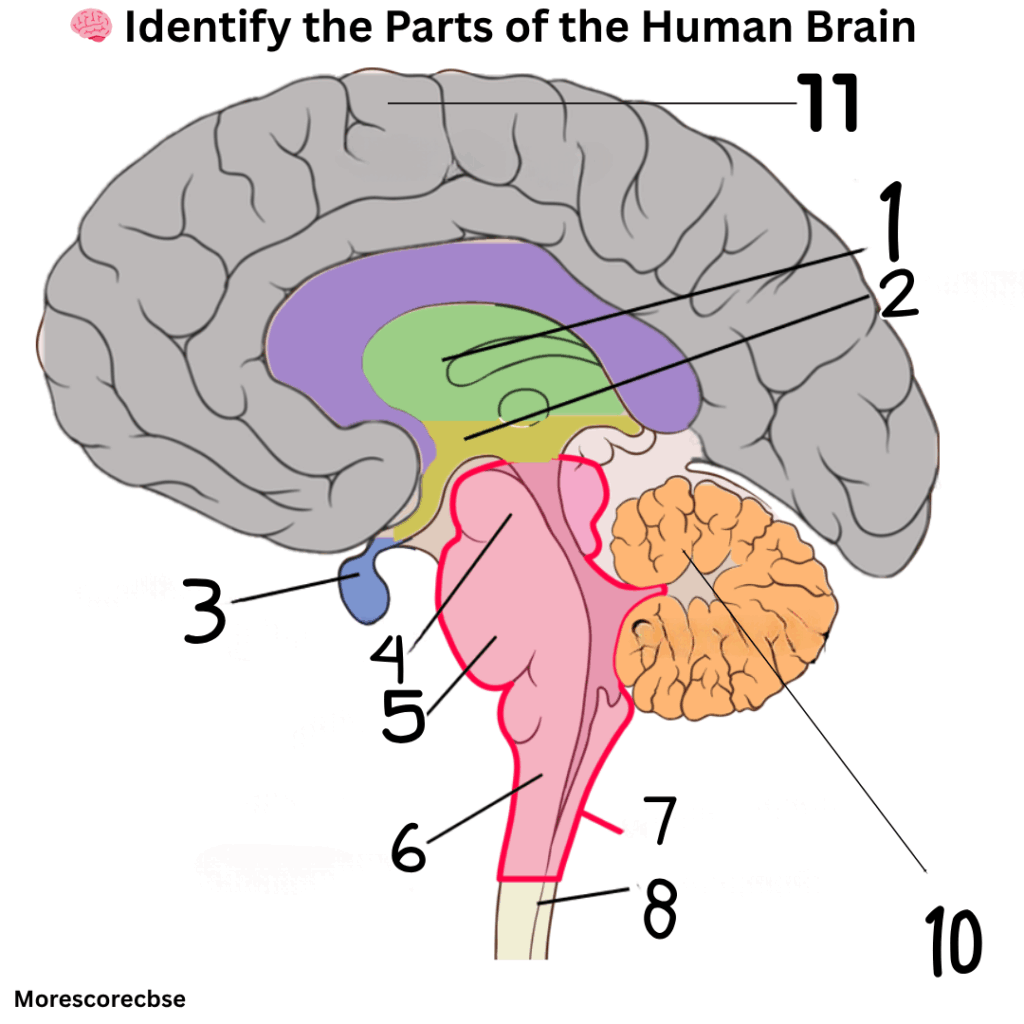
Parts of the Human Brain :
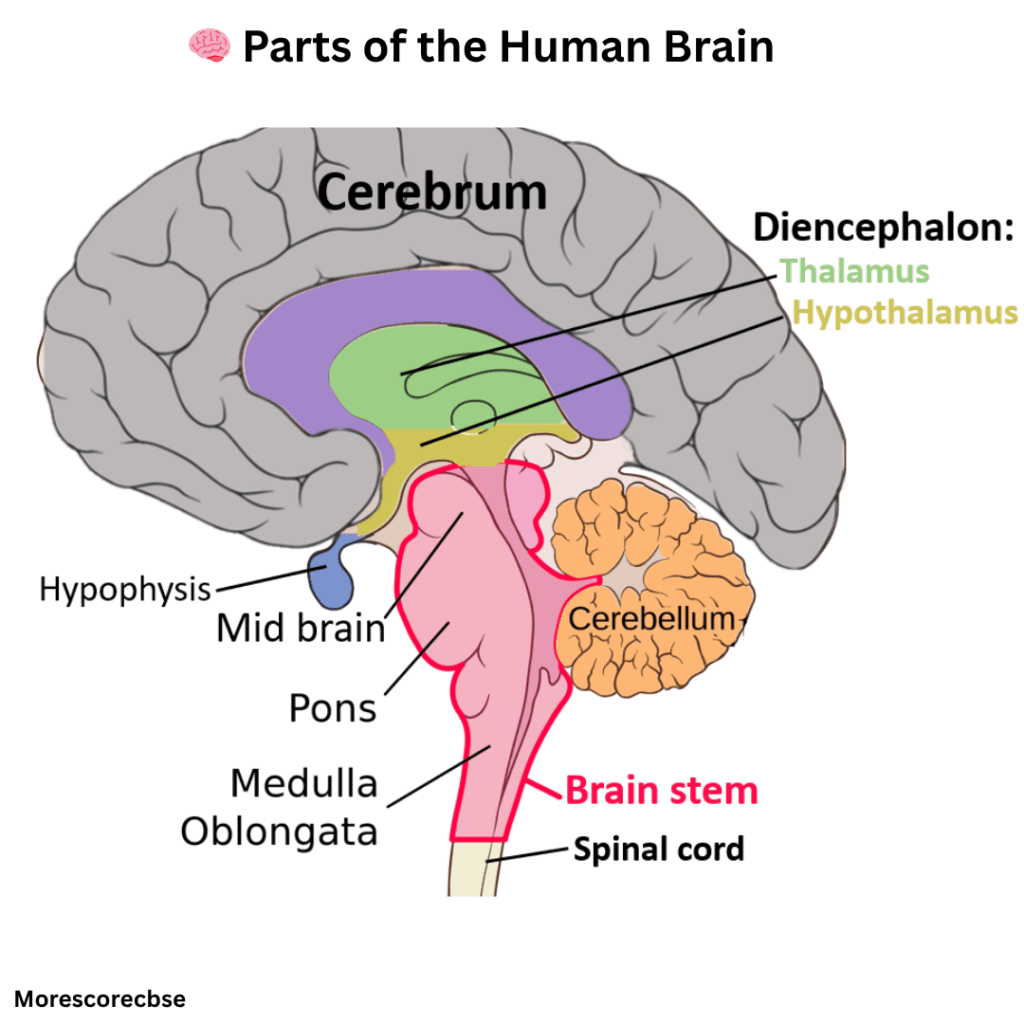
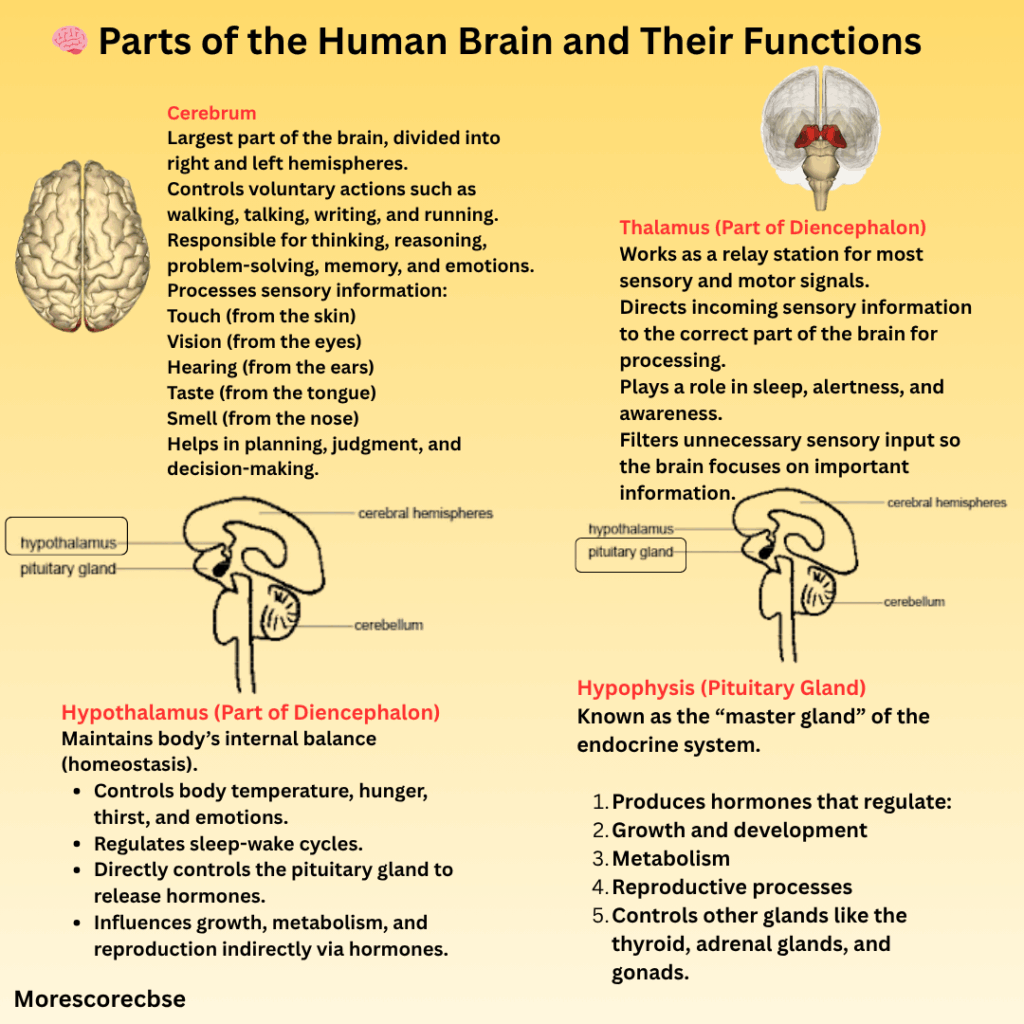
1. Cerebrum
- Largest part of the brain.
- Divided into left hemisphere and right hemisphere.
- Controls voluntary actions like walking, talking, running, and writing.
- Responsible for:
- Thinking – solving problems, planning, imagination.
- Reasoning – making decisions, judging situations.
- Memory – storing and recalling information.
- Emotions – happiness, sadness, anger, fear, etc.
- Processes sensory information:
- Touch (from skin)
- Vision (from eyes)
- Hearing (from ears)
- Taste (from tongue)
- Smell (from nose)
- Helps in planning, judgment, and decision-making.
2. Thalamus (Part of Diencephalon)
- Works like a relay station.
- Receives sensory information and sends it to the right part of the brain for processing.
- Plays a role in:
- Sleep regulation
- Alertness
- Awareness
- Filters unnecessary information so the brain focuses on important things.
3. Hypothalamus (Part of Diencephalon)
- Maintains internal balance of the body (homeostasis).
- Controls:
- Body temperature
- Hunger and thirst
- Emotions
- Sleep-wake cycle
- Controls the pituitary gland to release hormones.
- Indirectly influences growth, metabolism, and reproduction.
4. Hypophysis (Pituitary Gland)
- Called the “master gland” because it controls many other glands.
- Produces hormones that:
- Control growth and development.
- Regulate metabolism.
- Control reproduction.
- Direct other glands (thyroid, adrenal, gonads).
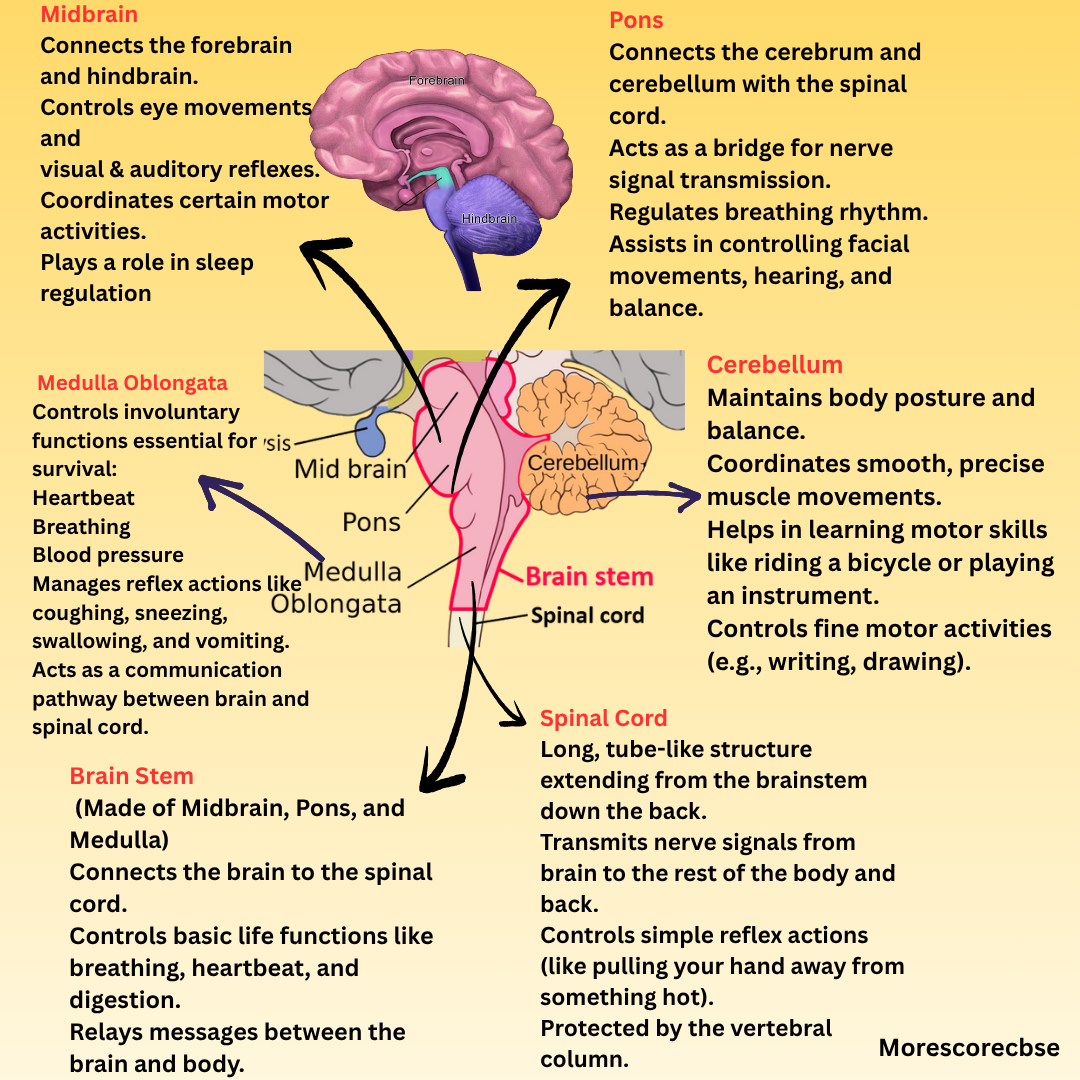
5. Midbrain
- Connects the forebrain and hindbrain.
- Controls:
- Eye movements
- Visual reflexes (quick reaction to light or movement)
- Auditory reflexes (quick reaction to sound)
- Coordinates certain motor activities.
- Helps regulate sleep.
6. Pons
- Connects the cerebrum and cerebellum with the spinal cord.
- Works as a bridge for nerve messages.
- Regulates breathing rhythm.
- Helps control:
- Facial movements
- Hearing
- Balance
7. Medulla Oblongata
- Controls involuntary actions needed for survival:
- Heartbeat
- Breathing
- Blood pressure
- Manages reflexes like:
- Coughing
- Sneezing
- Swallowing
- Vomiting
- Acts as a pathway between the brain and spinal cord.
8. Cerebellum
- Maintains posture and balance.
- Coordinates smooth, precise muscle movements.
- Helps in learning motor skills like:
- Riding a bicycle
- Playing an instrument
- Controls fine motor activities like writing and drawing.
9. Brain Stem
- Made up of Midbrain, Pons, and Medulla.
- Connects the brain to the spinal cord.
- Controls basic life functions:
- Breathing
- Heartbeat
- Digestion
- Sends messages between brain and body.
10. Spinal Cord
- Long, tube-like structure from brainstem to lower back.
- Transmits nerve messages between brain and body.
- Controls reflex actions (like pulling your hand away from a hot object).
- Protected by the vertebral column.
✅ Exam Tip: Remember the functions with mnemonics – for example:
“Cool Teachers Help Happy Minds Play Music Calmly Before Studying”
(Cerebrum – Thalamus – Hypothalamus – Hypophysis – Midbrain – Pons – Medulla – Cerebellum – Brainstem – Spinal cord)
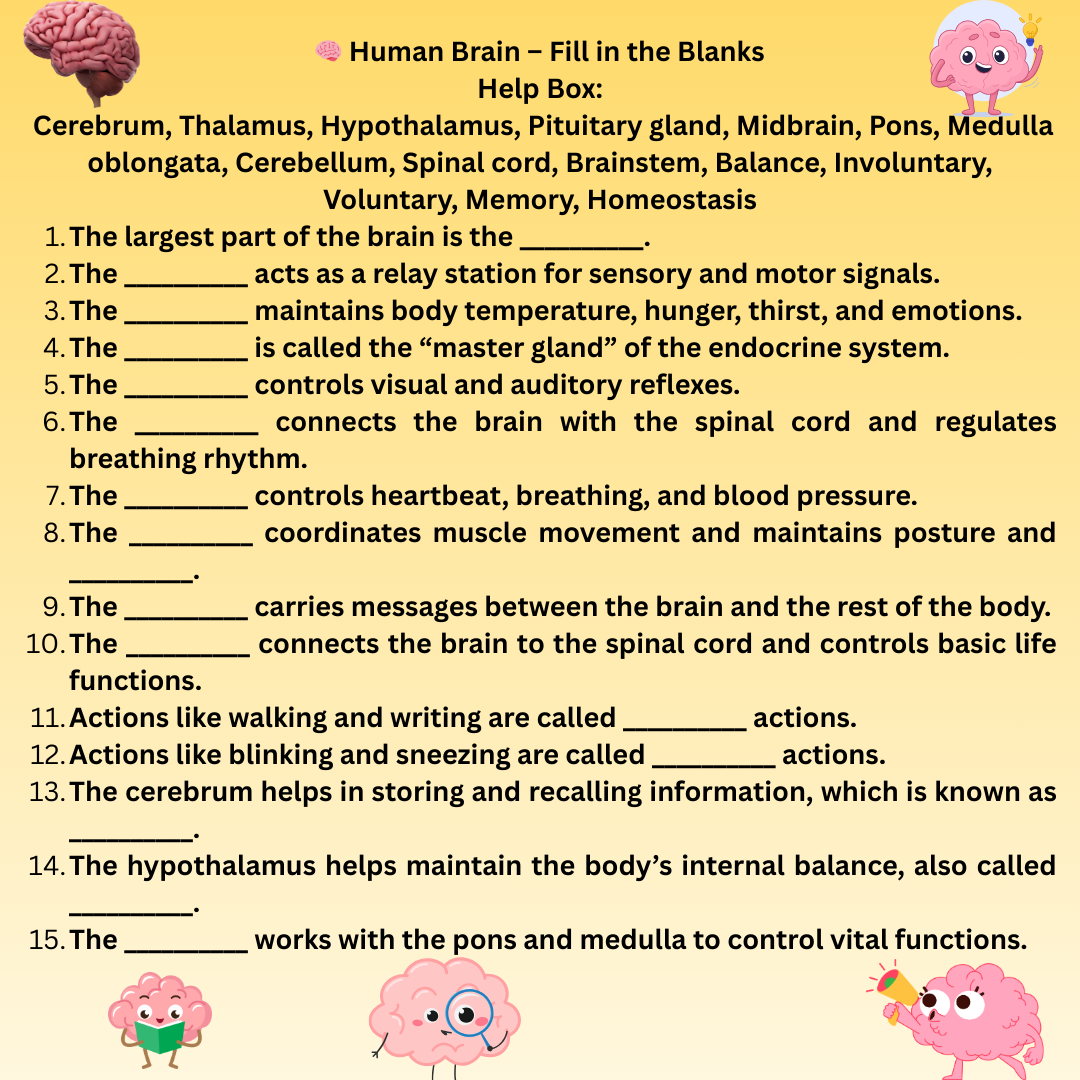
Activity: