Human respiratory system
🌬️ The Human Respiratory System – Structure, Functions & Importance
Breathing is something we do every moment without even thinking about it — yet behind this simple act lies a fascinating and complex system that keeps us alive: the Human Respiratory System.
In this blog, we’ll explore its parts, functions, and how they work together to give our body the oxygen it needs while removing carbon dioxide.
🫁 What is the Respiratory System?
The respiratory system is a network of organs and tissues that help us breathe. Its primary job is to bring in oxygen from the air we inhale and remove carbon dioxide from the air we exhale. This process is essential for life because every cell in our body needs oxygen to function.
🔍 Main Parts of the Respiratory System
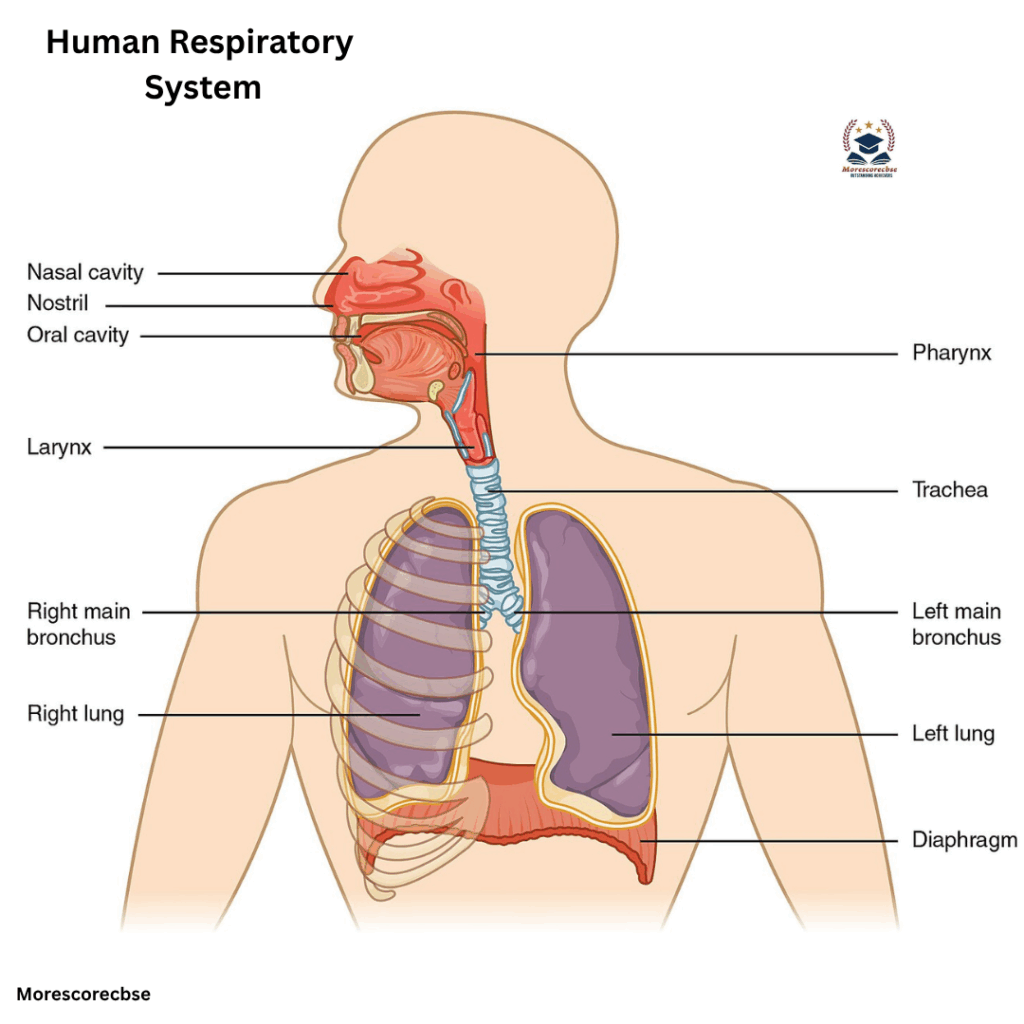
- Nasal Cavity – Warms, moistens, and filters the air before it reaches the lungs.
- Nostrils – Entry and exit points for air.
- Oral Cavity – Alternate breathing passage, especially during heavy activity or nasal blockage.
- Pharynx (Throat) – A shared path for air and food, directing air to the larynx.
- Larynx (Voice Box) – Produces sound and prevents food from entering the windpipe.
- Trachea (Windpipe) – Carries air from the throat to the bronchi.
- Right & Left Main Bronchi – Branches that carry air into each lung.
- Right & Left Lungs – The main organs for gas exchange.
- Diaphragm – Dome-shaped muscle that helps in breathing by contracting and relaxing.
⚙️ How Does the Respiratory System Work?
- Inhalation – When you breathe in, the diaphragm contracts and moves downward, creating space for the lungs to expand. Air enters through the nose or mouth, passes through the pharynx, larynx, and trachea, then into the bronchi and finally the lungs.
- Gas Exchange – Inside the lungs, millions of tiny air sacs called alveoli exchange oxygen and carbon dioxide with the blood.
- Exhalation – The diaphragm relaxes, pushing carbon dioxide–rich air out of the body.
📚 Functions of Each Part
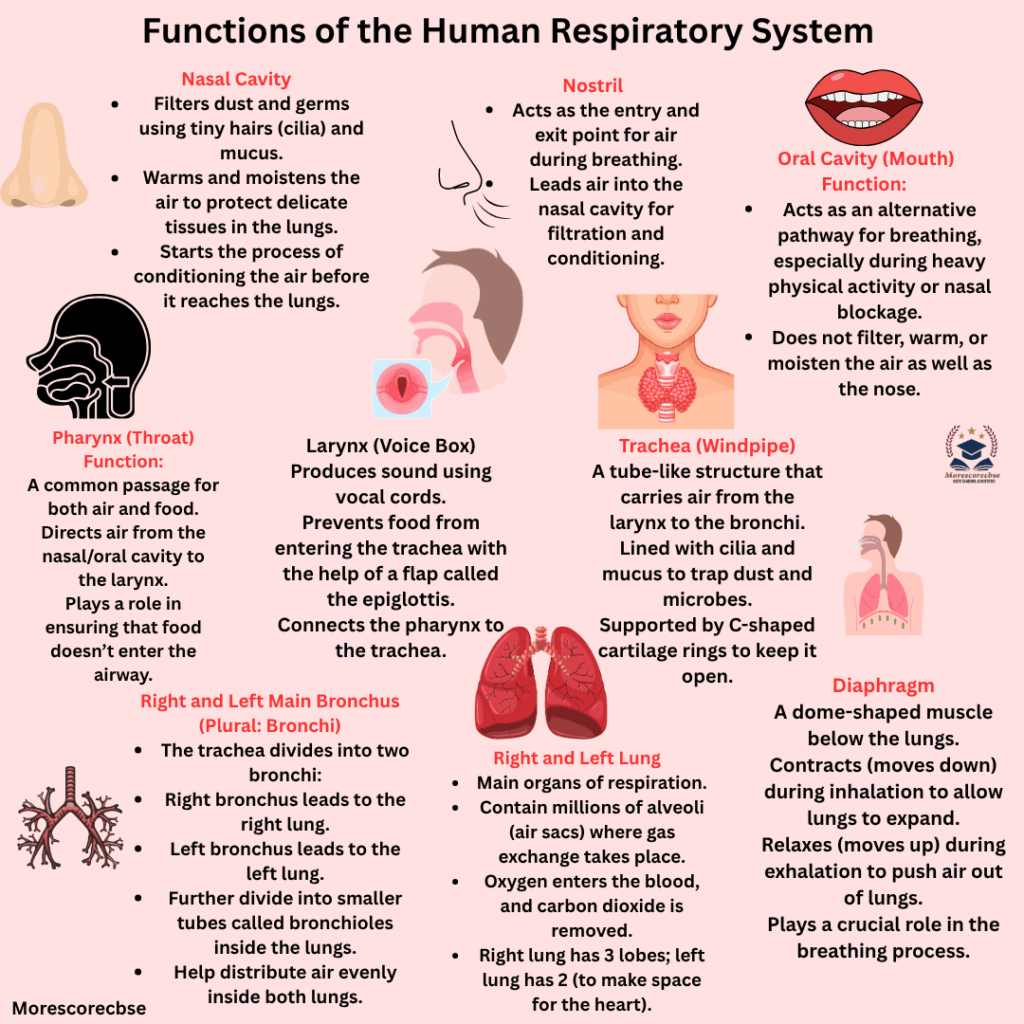
- Filter & Warm Air – Nasal cavity, nostrils, and trachea trap dust and moisten air.
- Voice Production – The Larynx creates sound using the vocal cords.
- Gas Exchange – Lungs and alveoli exchange oxygen and carbon dioxide.
- Breathing Movement – The Diaphragm controls inhalation and exhalation.
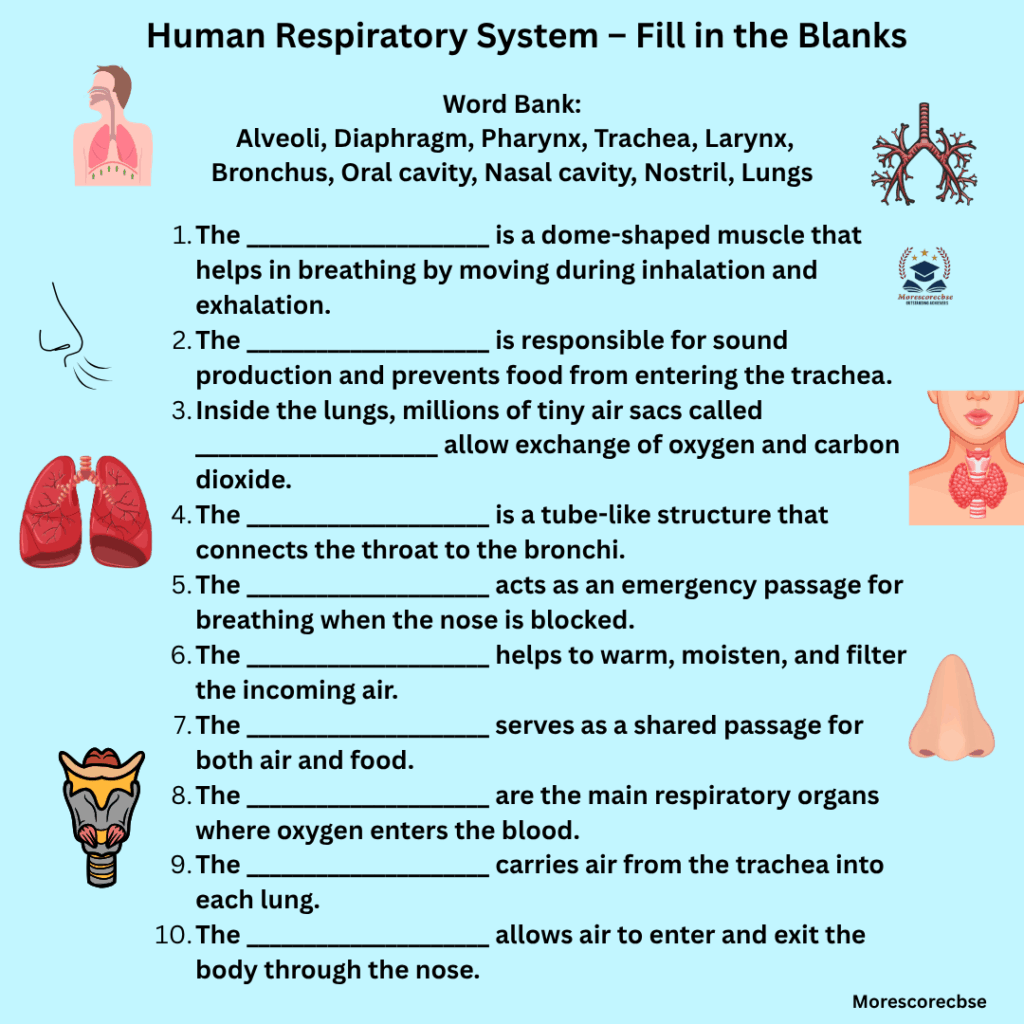
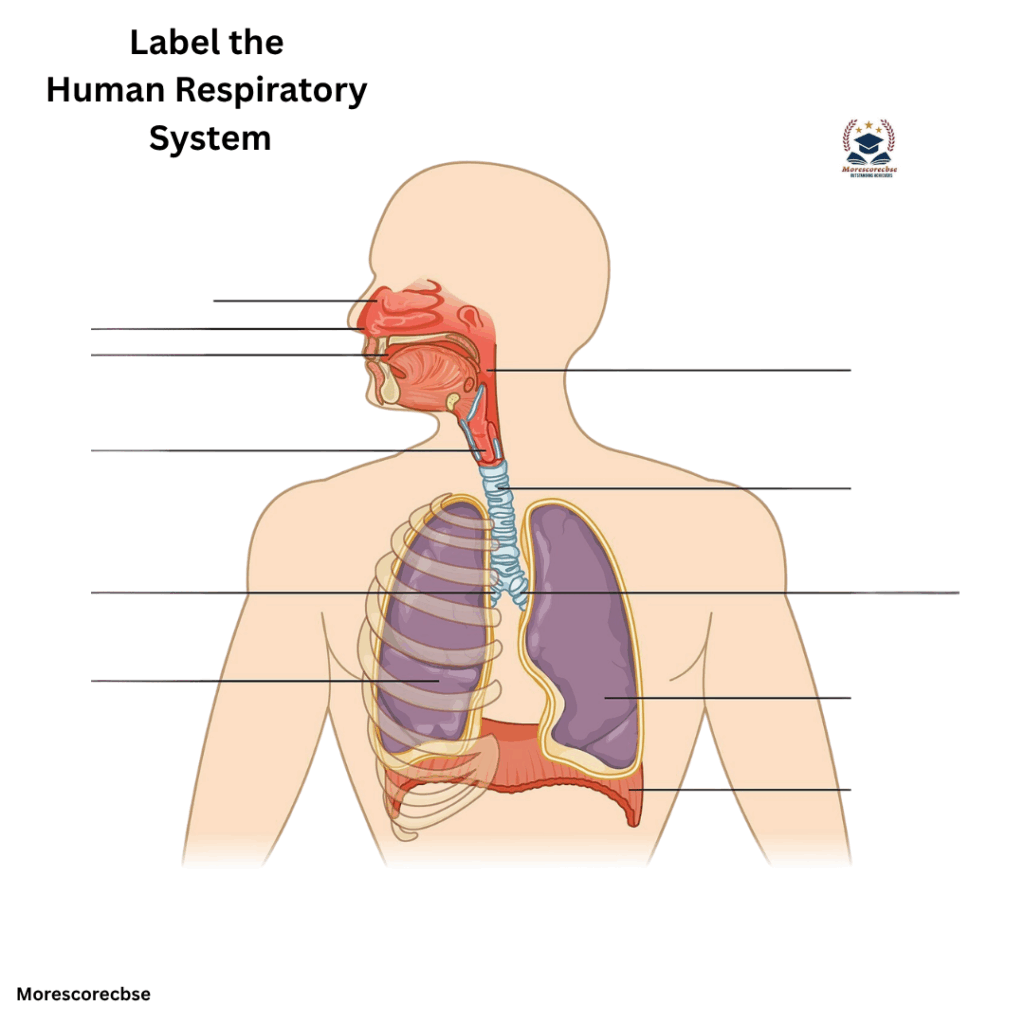
📝 Fun Learning Activity
🌟 Why is the Respiratory System Important?
Without oxygen, our cells can’t produce energy, and without removing carbon dioxide, our blood becomes toxic. This is why taking care of our lungs — by avoiding smoking, exercising regularly, and breathing clean air — is vital for a healthy life.
💡 Conclusion:
The human respiratory system is a marvel of design, working 24/7 to keep us alive.
