Human digestive system
🧠 Human Digestive System – Full Explanation with Diagrams, Organs & Enzymes (CBSE Level)
The human digestive system is one of the most important systems in our body. It is responsible for breaking down the food we eat into simpler substances that can be absorbed and used by the body. Without the digestive system, our body would not be able to get energy or nutrients from food, and we would not be able to survive.
🌟 What is Digestion?
Digestion is the process of breaking down large and complex food molecules like carbohydrates, proteins, and fats into simpler substances such as glucose, amino acids, and fatty acids. These simpler forms can then be absorbed by the blood and carried to different parts of the body. Digestion also helps in removing undigested waste material from the body.
🧠 What is the Human Digestive System?
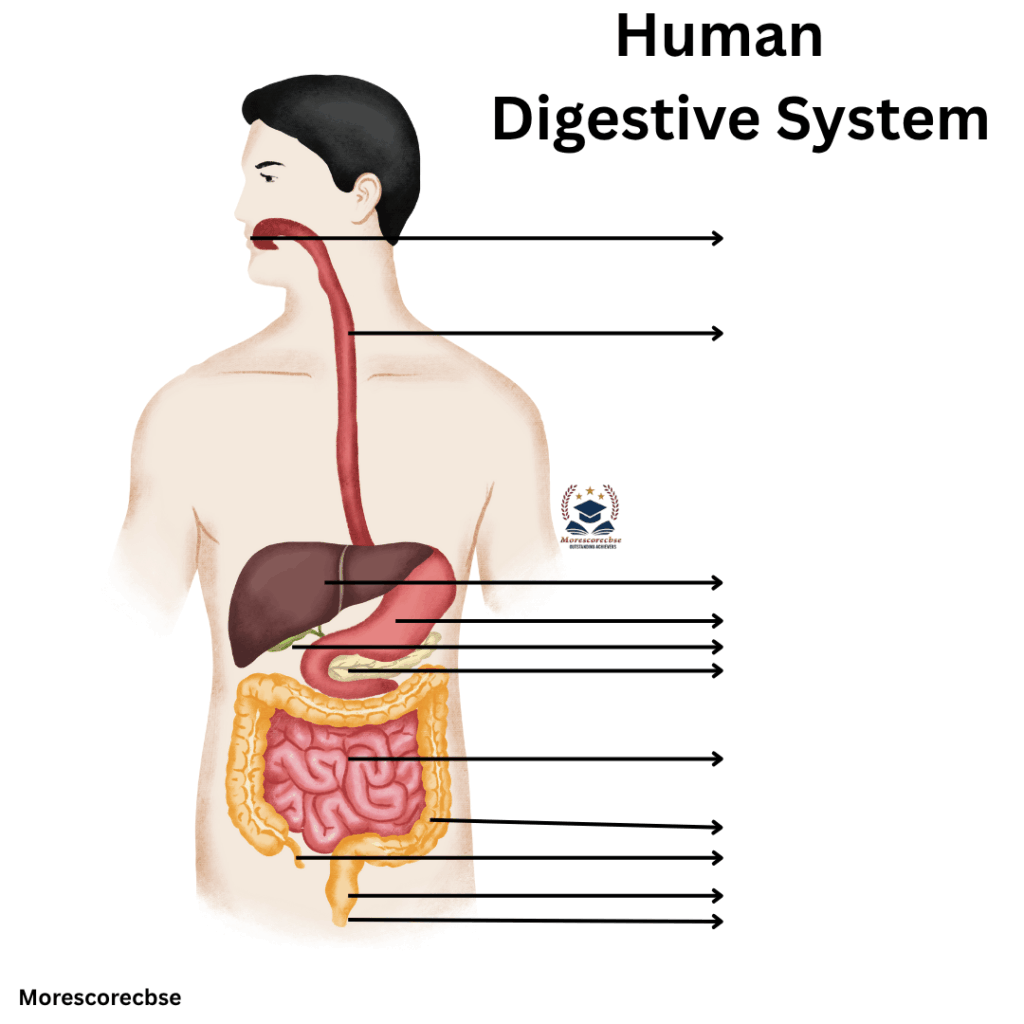
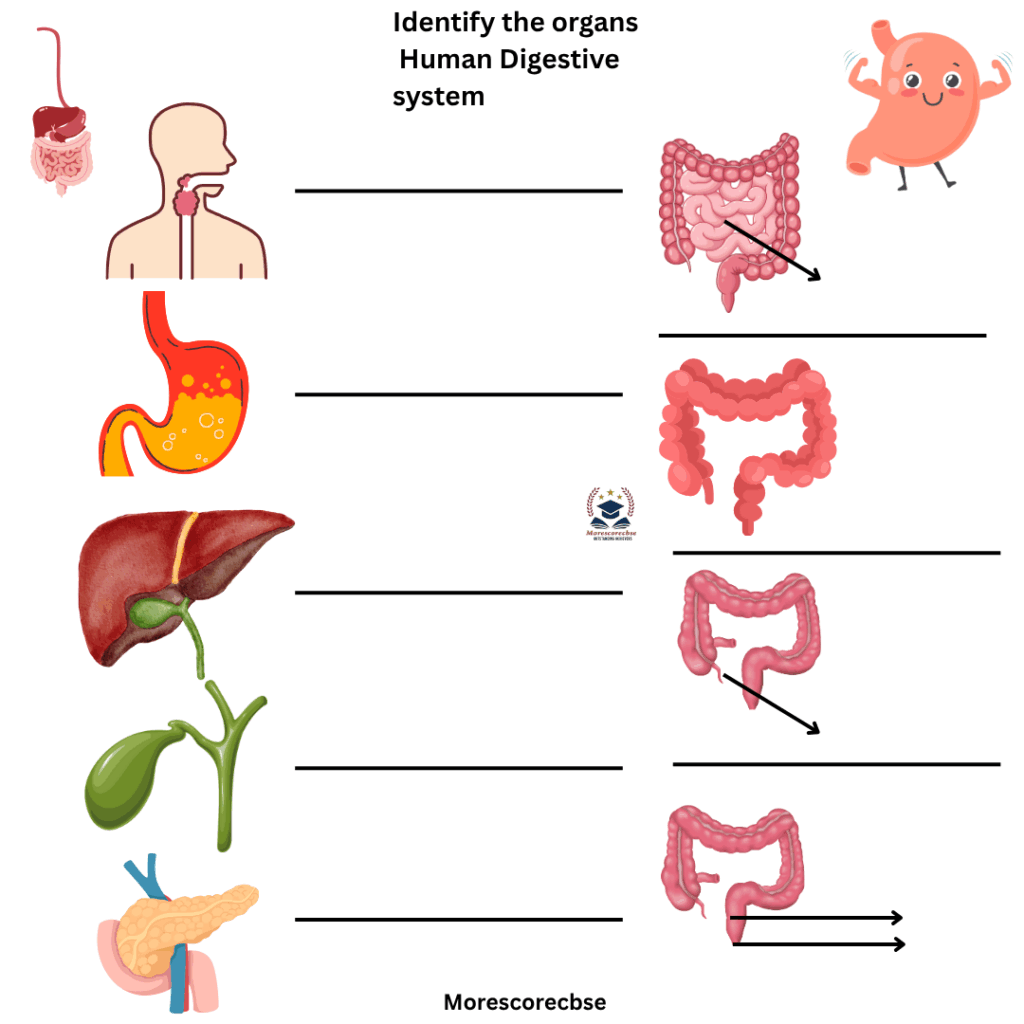
The human digestive system is a long and complex system made up of various organs. It begins at the mouth and ends at the anus. This system is also called the alimentary canal or the gastrointestinal tract. The digestive system includes the mouth, esophagus (food pipe), stomach, small intestine, large intestine, rectum, and anus. In addition, organs like the liver, gall bladder, and pancreas play a very important role in digestion, even though the food does not pass through them directly.

🔄 Process of Digestion – Step-by-Step Explanation
The process of digestion in humans happens in a step-by-step manner as food travels through the different parts of the digestive system.
1. Digestion Begins in the Mouth
The first step of digestion begins in the mouth. When we eat food, our teeth help to chew and grind it into smaller pieces. This is called mechanical digestion. At the same time, our salivary glands release saliva which contains an enzyme called salivary amylase. This enzyme starts breaking down starch (a carbohydrate) into maltose, which is a simpler sugar. The tongue helps in mixing the food with saliva and in swallowing the food.
2. The Food Travels Through the Oesophagus
After the food is chewed and mixed with saliva, it is pushed into the oesophagus (also called the food pipe). The walls of the oesophagus move in a wave-like motion called peristalsis, which pushes the food down into the stomach. No digestion happens here, but it is an important passageway for food.
3. Digestion Continues in the Stomach
Once the food reaches the stomach, it is mixed with gastric juices released by the stomach lining. These juices contain hydrochloric acid (HCl) and enzymes such as pepsin. Hydrochloric acid creates an acidic environment that is necessary for pepsin to work. Pepsin is an enzyme that begins the digestion of proteins by breaking them into smaller peptides. In infants, another enzyme called rennin is present, which helps in the digestion of milk protein called casein. A small amount of fat is also digested in the stomach by gastric lipase.
The stomach churns the food and turns it into a semi-liquid mixture called chyme, which is then slowly released into the small intestine.
4. The Role of the Liver, Gall Bladder, and Bile
The liver is the largest organ in the human body and it plays a vital role in digestion. It produces a greenish liquid called bile. Bile is not an enzyme, but it helps in the digestion of fats by breaking them into smaller droplets. This process is called emulsification. The bile produced by the liver is stored in the gall bladder and released into the small intestine when needed.
5. The Pancreas and Its Enzymes
The pancreas is another important organ that lies below the stomach. It produces several digestive enzymes and sends them into the small intestine. These enzymes include pancreatic amylase, which helps break down starch into maltose; trypsin and chymotrypsin, which help break down proteins into peptides; and pancreatic lipase, which helps break down fats into fatty acids and glycerol. The pancreas also produces nucleases, which break down DNA and RNA into nucleotides
6. Final Digestion and Absorption in the Small Intestine
The small intestine is the most important part of the digestive system where most digestion and absorption take place. It receives bile from the liver and enzymes from the pancreas, as well as intestinal juice secreted by its own walls. The intestinal juice contains several enzymes such as maltase, sucrase, lactase, peptidase, lipase, and nucleotidase. These enzymes complete the digestion of carbohydrates, proteins, fats, and nucleic acids.
The inner lining of the small intestine has many finger-like projections called villi. These villi increase the surface area for absorption. The nutrients that are digested are absorbed through the walls of the villi into the blood vessels.
7. Absorption of Water in the Large Intestine
The food that is not digested and absorbed moves into the large intestine. Here, the water and some minerals are absorbed back into the body. The remaining undigested food becomes solid waste.
8. Formation and Removal of Feces
The solid waste, also known as feces, is stored in the rectum and is removed from the body through the anus. This process is called egestion.
🧪 Important Enzymes in the Human Digestive System
Enzymes are special proteins that act as biological catalysts. They speed up the chemical reactions that break down food into simpler substances that our body can absorb. Different digestive organs secrete different enzymes, and each enzyme has a specific role to play.
🔹 1. Mouth – Salivary Glands
- Enzyme: Salivary Amylase (also called Ptyalin)
- Function: This enzyme starts the digestion of carbohydrates. It breaks down starch, which is a complex carbohydrate, into a simpler sugar called maltose.
- Medium: Slightly alkaline
🔹 2. Stomach – Gastric Glands
- Enzyme: Pepsin
- Function: Pepsin helps break down proteins into peptides (smaller chains of amino acids). It only works in acidic conditions.
- Enzyme (in infants): Rennin
- Function: Helps digest milk protein (casein) by curdling it for better digestion.
- Other Component: Hydrochloric Acid (HCl)
- Function: HCl creates an acidic environment needed for pepsin to function. It also kills harmful bacteria in the food.
🔹 3. Pancreas – Pancreatic Juice
The pancreas releases several enzymes into the small intestine through the pancreatic duct:
- Pancreatic Amylase: Continues the breakdown of starch into maltose.
- Trypsin and Chymotrypsin: Break down proteins into peptides.
- Pancreatic Lipase: Breaks down fats into fatty acids and glycerol.
- Nucleases (DNase and RNase): Break down DNA and RNA into nucleotides.
All of these enzymes work in an alkaline medium created by bicarbonate ions present in pancreatic juice.
🔹 4. Liver and Gall Bladder – Bile Juice
- Component (not an enzyme): Bile
- Function: Although bile is not an enzyme, it plays a vital role in digestion. It emulsifies fats, meaning it breaks large fat globules into tiny droplets, making it easier for lipase to act on them.
- Medium: Alkaline
🔹 5. Small Intestine – Intestinal Juice (Succus Entericus)
The walls of the small intestine produce intestinal juice, which contains many enzymes that complete the digestion process:
- Maltase: Breaks down maltose into glucose.
- Sucrase: Breaks down sucrose (table sugar) into glucose and fructose.
- Lactase: Breaks down lactose (milk sugar) into glucose and galactose.
- Peptidase (or Erepsin): Converts peptides into amino acids.
- Lipase: Completes digestion of fats into fatty acids and glycerol.
- Nucleotidase: Breaks down nucleotides into sugar, phosphate, and nitrogen bases.
All these enzymes help convert complex food molecules into their simplest forms so they can be absorbed by the villi in the small intestine.
| Enzyme | Produced By | Acts On | End Product |
|---|---|---|---|
| Salivary Amylase | Salivary Glands (Mouth) | Starch | Maltose |
| Pepsin | Gastric Glands (Stomach) | Proteins | Peptides |
| Rennin (in infants) | Gastric Glands (Stomach) | Milk Protein (Casein) | Curdled Protein |
| Pancreatic Amylase | Pancreas | Starch | Maltose |
| Trypsin, Chymotrypsin | Pancreas | Proteins | Peptides |
| Pancreatic Lipase | Pancreas | Fats | Fatty Acids and Glycerol |
| Nucleases | Pancreas | DNA and RNA | Nucleotides |
| Maltase | Small Intestine | Maltose | Glucose |
| Sucrase | Small Intestine | Sucrose | Glucose + Fructose |
| Lactase | Small Intestine | Lactose | Glucose + Galactose |
| Peptidase | Small Intestine | Peptides | Amino Acids |
| Intestinal Lipase | Small Intestine | Fats | Fatty Acids and Glycerol |
| Nucleotidase | Small Intestine | Nucleotides | Sugar + Phosphate + Bases |
📘 CBSE Tip for Students
📌 Focus on the sequence of digestion
📌 Remember enzymes and their functions
📌 Practice diagrams for labeling questions
📌 Know the functions of bile, liver, pancreas, and enzymes
🧠 Conclusion
The human digestive system is a fascinating and essential system that allows our body to gain energy and nutrients from the food we eat. Every organ in the digestive system has a specific role, and the process is carefully coordinated to ensure complete digestion. Understanding this system not only helps students do well in their exams but also builds awareness of how our body functions daily.
📚 Frequently Asked Questions (FAQs)
Q1. What is the function of bile in digestion?
Bile helps in the digestion of fats by breaking them into smaller droplets, a process called emulsification.
Q2. What enzyme breaks down proteins in the stomach?
The enzyme pepsin breaks down proteins into peptides in the stomach.
Q3. What is the role of villi in digestion?
Villi are small finger-like structures in the small intestine that help in the absorption of digested nutrients into the blood.
Q4. Is bile an enzyme?
No, bile is not an enzyme. It is a digestive juice produced by the liver to help in fat digestion.
Q5. What is the main site of digestion and absorption?
The small intestine is the main site where digestion is completed and nutrients are absorbed.
Q6: What is the function of bile?
Bile breaks down fats into small droplets (emulsification) to make digestion easier.
Q7: Which organ absorbs nutrients?
The small intestine absorbs nutrients through villi.
Q8: Where does protein digestion begin?
In the stomach, by the enzyme pepsin.
Q9: Is bile an enzyme?
No, bile is not an enzyme. It is a digestive juice.
Q10: What are villi?
Villi are tiny finger-like projections in the small intestine that help absorb nutrients into the blood
Worksheet for Practice
🧪 Digestive Enzymes – Fill in the Blanks Worksheet
🧩 Help Box
Maltose, Small Intestine, Pancreas, Glucose + Galactose, Peptidase, Rennin, DNA and RNA, Glucose, Milk Protein (Casein), Gastric Glands, Proteins, Trypsin, Salivary Glands, Starch, Intestinal Lipase, Nucleotides, Fatty Acids and Glycerol, Nucleotidase, Sucrase, Pepsin, Sucrose
✍️ Fill in the Blanks
- __________ is produced by the pancreas and acts on fats to form fatty acids and glycerol.
- The enzyme __________ breaks down lactose into glucose and galactose and is secreted by the small intestine.
- __________ is secreted by gastric glands in the stomach and breaks proteins into peptides.
- The enzyme __________ is found in the mouth and starts the digestion of starch into maltose.
- __________ is produced by the small intestine and breaks down sucrose into glucose and fructose.
- Trypsin and Chymotrypsin are produced by the __________ and help in breaking down proteins into peptides.
- __________ is present in infants and helps in curdling milk protein for easier digestion.
- Pancreatic amylase acts on __________ and breaks it down into maltose.
- The enzyme __________ acts on peptides and converts them into amino acids. It is secreted by the small intestine.
- __________ are broken down by nucleases, which are produced by the pancreas.
- __________ is the enzyme that acts on maltose to form glucose.
- The organ that produces salivary amylase is the __________.
- The enzyme __________ breaks down nucleotides into sugar, phosphate, and nitrogenous bases.
- The enzyme __________ is secreted in the stomach and acts on proteins.
- __________ is the end product when intestinal lipase acts on fats.
