class 10 magnetic effects of electric current
Magnet is an object that attracts objects made of iron, cobalt and nickel. Magnet comes to rest in North – South direction, when suspended freely.
Properties of Magnet:
- A free suspended magnet always points towards the north and south direction.
- The pole of a magnet which points toward north direction is called north pole or north-seeking.
- The pole of a magnet which points toward south direction is called south pole or south seeking.
- Like poles of magnets repel each other while unlike poles of magnets attract each other.
How are electricity and magnetism related? Explain with an example.
- An electric current flowing through a conductor generates a magnetic field around it. This relationship is fundamental to electromagnetism.
- For example, if you pass a current through a straight copper wire and place a compass near it, the compass needle will deflect, showing the presence of a magnetic field around the conductor.
- This principle is applied in devices like electromagnets and electric motors.
Who discovered the magnetic effect of electric current, and what was the significance of this discovery?
- Hans Christian Oersted discovered the magnetic effect of electric current in 1820.
- He observed that a compass needle near a current-carrying conductor was deflected, showing that electricity and magnetism were connected.
- This discovery was crucial as it laid the foundation for the field of electromagnetism, leading to the development of devices like electric motors, generators, and telecommunication systems.
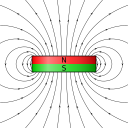
- Magnetic field lines are visual representations of the direction and strength of a magnetic field around a magnet. They emerge from the north pole and merge at the south pole. It is a quantity that has both direction and magnitude (i.e., Vector quantity)
Direction of field line: Outside the magnet, the direction of magnetic field line is taken from North pole to South pole. Inside the magnet, the direction of magnetic field line is taken from South pole to North pole.
Strength of magnetic field: The closeness of field lines shows the relative strength of magnetic field, i.e. closer lines show stronger magnetic field and vice-versa. Crowded field lines near the poles of magnet show more strength.
Properties of magnetic field lines
- (i) They do not intersect each other.
- (ii) It is taken by convention that magnetic field lines emerge from North pole and merge at the South pole. Inside the magnet, their direction is from South pole to North pole. Therefore magnetic field lines are closed curves.
Why don’t two magnetic field lines intersect each other?
If two field lines intersected, it would mean the magnetic field at that point has two different directions, which is impossible.
Intext:
Why does a compass needle get deflected when placed near a bar magnet?
- A compass needle itself is a small magnet with a north and south pole. When placed near a bar magnet, it experiences a force from the magnetic field of the bar magnet.
- This force causes the needle to align along the field lines of the bar magnet, resulting in deflection.
- The deflection occurs because like poles repel and opposite poles attract, so the compass needle aligns itself in the direction of the magnetic field.
Explain how a current-carrying conductor creates a magnetic field and the factors that affect the magnetic field strength.
Diagram need to be inserted
When an electric current flows through a conductor, it produces a magnetic field around it. This magnetic field consists of concentric circles around the wire.
The strength of the magnetic field depends on:
- 1. The amount of current: Increasing the current increases the magnetic field strength.
- 2. The distance from the conductor: The magnetic field weakens as the distance from the conductor increases.
What is the Right-Hand Thumb Rule?
The Right-Hand Thumb Rule helps determine the direction of the magnetic field around a current-carrying conductor.
According to this rule:
If you hold the conductor with your right hand and point your thumb in the direction of the current, the direction in which your fingers curl around the conductor represents the magnetic field’s direction.
Describe the magnetic field created by a current-carrying circular loop.
- A current-carrying circular loop produces a magnetic field that appears as concentric circles near the wire and forms straight lines at the center of the loop.
- The magnetic field strength is stronger at the center and decreases with distance from the loop.
- The magnetic field produced by a current-carrying wire at a given point depends directly on the current passing through it.
- Therefore, if there is a circular coil having n turns, the field produced is n times as large as that produced by a single turn.
- This is because the current in each circular turn has the same direction, and the field due to each turn then just adds up
The direction of the magnetic field inside the loop can be determined by the Right-Hand Thumb Rule.
Maxwell’s Corkscrew Rule states that:
- If we consider ourselves driving a corkscrew in the direction of the current, then the direction of the corkscrew is the direction of the magnetic field.
- “If you curl the fingers of your right hand in the direction of the current flowing through a straight conductor, then your thumb points in the direction of the magnetic field around the conductor.”
What is a solenoid? Describe its magnetic field and how it behaves like a bar magnet.
- A solenoid is a coil of multiple turns of insulated copper wire wrapped in the shape of a cylinder.
- When current flows through the solenoid, it generates a magnetic field similar to that of a bar magnet, with one end acting as a north pole and the other as a south pole.
- The magnetic field lines inside the solenoid are parallel, indicating a uniform magnetic field. This characteristic makes solenoids useful in creating electromagnets.

What is Fleming’s Left-Hand Rule, and how does it apply to a current-carrying conductor in a magnetic field?
Fleming’s Left-Hand Rule is used to determine the direction of force on a current-carrying conductor placed in a magnetic field.
According to this rule:
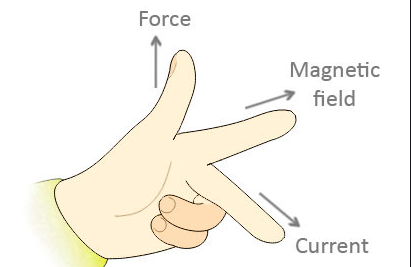
- Stretch your left hand such that the thumb, forefinger, and middle finger are perpendicular to each other.
- If the forefinger points in the direction of the magnetic field, and the middle finger points in the direction of the current, the thumb indicates the direction of the force.
- This rule forms the basis for devices like electric motors, where a magnetic field exerts a force on a current-carrying coil to create rotation.
Magnetism in medicine:
Magnetic Resonance Imaging (MRI) is a medical imaging technique that uses strong magnetic fields and radio waves to create detailed images of the body’s internal structures.
Principle: MRI works by aligning hydrogen protons in the body with a magnetic field. A radiofrequency pulse is then used to disturb this alignment, and the energy released by the protons is detected to form an image.
No Radiation: Unlike X-rays or CT scans, MRI does not use harmful radiation.
Types of Electric Generators:
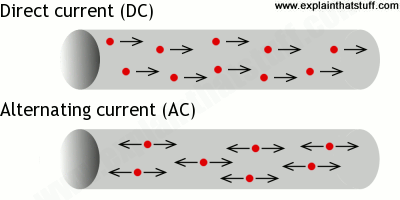
AC Generator (Alternator): Produces alternating current (AC), where the current changes direction periodically.
DC Generator: Produces direct current (DC), where the current flows in one constant direction.
Uses of Electric Generators:
- Power Stations: To generate electricity for homes and industries.
- Wind Turbines: Convert wind energy into electricity.
- Hydroelectric Plants: Use falling water to generate electricity.
- Backup Generators: Provide emergency electricity when the main power supply fails
Direct Current (DC) Alternating Current (AC)
| Feature | AC (Alternating Current) | DC (Direct Current) |
|---|---|---|
| Definition | Current changes direction periodically | Current flows only in one direction |
| Flow of Electrons | Electrons move back and forth | Electrons move in one constant direction |
| Voltage Variation | Voltage rises and falls, continuously alternating between positive and negative values | Voltage remains constant and steady |
| Waveform | Represented by sine wave, can be square or triangular in some systems | Represented by straight line |
| Frequency | Has frequency (50 Hz in India, 60 Hz in USA) | No frequency (0 Hz) |
| Source of Power | Produced by power plants, generators, alternators | Produced by batteries, solar panels, fuel cells |
| Transmission | Can be transmitted over long distances with low power loss | Not suitable for long-distance transmission due to high energy loss |
| Voltage Conversion | Easy using transformers | Difficult; needs electronic converters |
| Cost of Transmission | Economical for long-distance transmission | Expensive to transmit over long distances |
| Applications | Used in homes, offices, industries (lights, fans, TVs, refrigerators, motors) | Used in electronic devices (mobile, laptop, LED lights, EV batteries) |
| Safety | Can be more dangerous at high voltages due to alternating nature | Safer for small electronics at low voltage |
| Generator Type | Generated using alternators | Generated using DC generators (with commutators) |
| Storage | AC cannot be stored directly | DC can be stored in batteries |
| Conversion | AC → DC using rectifier | DC → AC using inverter |
| Power Loss | Less loss during transmission | More loss during transmission |
| Example Devices | Power grid, transformers, household wiring | Batteries, power banks, electric vehicles |
| Practical Examples | Electricity from wall socket | Battery in phone, laptop charger output |
What is the main supply of electric power in homes called?
- The main supply of electric power to homes is called the mains.
- The mains can deliver electric power either through overhead electric poles or underground cables, depending on the region and infrastructure.
- This supply consists of two wires: the live wire and the neutral wire, which carry electrical current to the home.
What are the live and neutral wires in a domestic circuit?
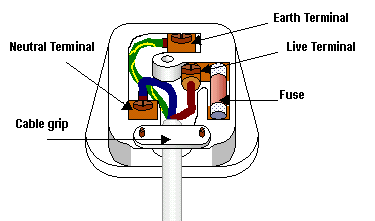
Live Wire: The live wire is typically covered in red insulation and carries the positive current from the power station to the house. This wire is at a high potential, typically 220 V.
Neutral Wire: The neutral wire is usually covered in black insulation and carries the negative current back to the power station. It is connected to the ground and is at zero potential
Together, the live and neutral wires complete the circuit that powers the electrical appliances in the home.
What is the potential difference between the live and neutral wires in homes?
- The potential difference between the live wire and neutral wire in Indian homes is 220 V.
- This means that the voltage supplied by the live wire is 220 V higher than that of the neutral wire, allowing current to flow through connected appliances when the circuit is complete.
What is the function of the earth wire in a domestic circuit?
- The earth wire is a safety feature in the electrical system.
- It is covered with green insulation and is connected to a metal plate buried deep in the earth near the house.
- The earth wire is typically connected to appliances with metallic bodies, such as electric presses, toasters, fans, and refrigerators.
- The earth wire provides a low-resistance conducting path to the ground for any stray current or leakage.
- If there is a fault and current leaks to the metallic body of the appliance, the earth wire ensures that the current flows to the ground rather than causing an electric shock to the user.
How are appliances connected in domestic circuits?
- In domestic circuits, appliances are connected in parallel across the live and neutral wires.
- This parallel arrangement ensures that each appliance receives the same potential difference (220 V in India).
- Additionally, each appliance is provided with a separate switch to turn it on or off.
- This setup allows appliances to operate independently without affecting the others, even if one appliance is switched off.
What is the role of a fuse in a domestic circuit?
- The fuse is a crucial safety component in all domestic circuits.
- It is designed to prevent damage to appliances and wiring due to overloading or short-circuiting.
- The fuse consists of a thin wire or metal strip that melts when the current exceeds the safe limit.
- Overloading occurs when there is excessive current in the circuit, which can be caused by connecting too many appliances to a single socket.
- Short-circuiting happens when the live and neutral wires touch, causing an uncontrolled flow of current.
- When the current becomes too high, the Joule heating effect (the heat produced by electric current) causes the fuse to melt, breaking the circuit and stopping the dangerous current flow.
What causes overloading in a domestic circuit?
- Overloading in a circuit can occur due to several factors:
- Short-circuiting: If the live wire and neutral wire come into direct contact, it causes a sudden surge of current, leading to overloading. This can happen if the wires are damaged or if there is a fault in an appliance.
- Overvoltage: An accidental rise in the supply voltage can cause too much current to flow, leading to overloading.
- Too many appliances connected to a single socket: Connecting multiple high-power appliances to a single socket can increase the current beyond the safe limit, causing overloading.
Why is the earth wire important for appliances with metallic bodies?
- The earth wire is particularly important for appliances with metallic bodies, such as refrigerators, electric presses, and toasters, because it provides a safe path for leakage current.
- If there is a fault in the appliance and current leaks to the metallic body, the earth wire directs the current to the ground.
- This prevents the metallic body from becoming charged with electricity, which could otherwise result in electric shocks to the user.
- By maintaining the metallic body of the appliance at the same potential as the earth, the earth wire helps to ensure the safety of the user.
How does a fuse protect the circuit from damage?
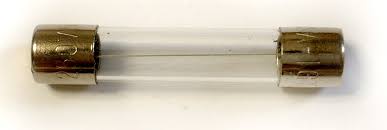
- The fuse protects the circuit by melting when the current exceeds a preset limit.
- This is due to the Joule heating effect, where the current generates heat, causing the thin wire inside the fuse to melt.
- When the fuse melts, it breaks the circuit, stopping the flow of current.
- This prevents further damage to the appliances and the circuit wiring.
- The fuse acts as a safety device by ensuring that excessive current does not cause overheating, fires, or damage to electrical components.
How are domestic circuits rated in terms of current?
- Domestic circuits are usually rated according to the amount of current they can safely carry. In homes, there are typically:
- 15 A circuits: These circuits are used for high-power appliances such as geysers, air coolers, and water pumps.
- 5 A circuits: These circuits are used for low-power appliances like bulbs, fans, and small kitchen appliances.
