📚 CBSE Class 9 Mathematics – Chapter 3: The World of Numbers (New Syllabus) – Solved Problems & Practice Questions! ✨
Master Chapter 3 with our easy-to-understand solved examples designed as per the latest CBSE syllabus. 🎯
✅ Step-by-step solutions
✅ Important exam-oriented questions
✅ Additional practice problems with answers
✅ Perfect for revision and self-study
Strengthen your concepts and boost your confidence before exams! 💯
📖 Learn, Practice, and Score More!
Ex 3.1 Solved problems with Practice sums
1. A merchant in the port city of Lothal is exchanging bags of spices for copper ingots. He receives 15 ingots for every 2 bags of spices. If he brings 12 bags of spices to the market, how many copper ingots will he leave with?
Answer:
Given:
- 2 bags of spices = 15 copper ingots
- 12 bags of spices = ? copper ingots
Using proportion:
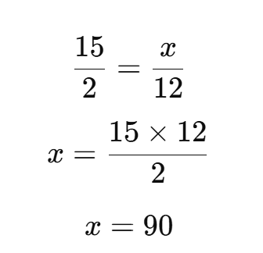
Therefore, the merchant will leave with 90 copper ingots.
2. Look at the sequence of numbers on one column of the Ishango bone: 11, 13, 17, 19. What do these numbers have in common? List the next three numbers that fit this pattern.
Answer:
The numbers 11, 13, 17, and 19 are prime numbers. A prime number has only two factors: 1 and itself.
The next three prime numbers after 19 are:23, 29, and 31
Therefore, the numbers have in common that they are prime numbers, and the next three numbers are 23, 29, and 31.
3. We know that Natural Numbers are closed under addition (the sum of any two natural numbers is always a natural number). Are they closed under subtraction? Provide a couple of examples to justify your answer.
No, natural numbers are not closed under subtraction.
Examples:
- (5 – 3 = 2), which is a natural number.
- (3 – 5 = -2), which is not a natural number.
Since subtracting one natural number from another does not always give a natural number, natural numbers are not closed under subtraction.
Therefore, natural numbers are not closed under subtraction.
4. Ancient Indians used the joints of their fingers to count, a practice still seen today. Each finger has 3 joints, and the thumb is used to count them. How many can you count on one hand? How does this relate to the ancient base-12 counting systems?
Answer:
Each of the four fingers (excluding the thumb) has 3 joints.
Number of joints: 4 * 3 = 12
Using the thumb to touch each joint, a person can count from 1 to 12 on one hand.
This method is related to the base-12 counting system, where numbers are grouped in twelves instead of tens. Ancient people likely used finger joints for counting, which helped develop the base-12 system.
Therefore, a person can count up to 12 on one hand, and this counting method is connected to the ancient base-12 number system.
Exercise 3.1 – Practice Sums
1. A trader exchanges 4 bags of wheat for 28 copper coins. How many copper coins will he receive for 20 bags of wheat?
2. A merchant receives 18 silver coins for every 3 bags of spices. If he brings 15 bags of spices, how many silver coins will he get?
3. Look at the sequence: 3, 5, 7, 11, 13. What do these numbers have in common? Write the next three numbers in the pattern.
4. Observe the pattern: 2, 4, 8, 16, 32. What is the rule? Write the next three terms.
5. Are natural numbers closed under division? Give two examples to justify your answer.
6. Are whole numbers closed under subtraction? Give examples to support your answer.
7. A farmer exchanges 5 sacks of grain for 40 clay pots. How many clay pots will he receive for 25 sacks of grain?
8. Each finger has 3 joints. If a person counts using the joints of four fingers on one hand, how many joints can be counted? How many joints can be counted using both hands?
9. Look at the sequence: 1, 4, 9, 16, 25. Identify the pattern and write the next three numbers.
10. A merchant receives 12 ingots for every 2 bags of spices. How many ingots will he receive for 18 bags of spices?
11. Explain why natural numbers are closed under addition with two examples.
12. A trader exchanges 6 baskets of cotton for 54 copper coins. How many copper coins will he receive for 24 baskets of cotton?
13. Look at the sequence: 10, 20, 30, 40, 50. Write the next five terms and state the rule.
14. Ancient people used a base-12 counting system. Explain how finger joints can help count up to 12 on one hand.
15. A merchant exchanges 8 bags of rice for 64 silver coins. How many silver coins will he receive for 32 bags of rice?
Practice sum Answers:
1. A trader exchanges 4 bags of wheat for 28 copper coins. How many copper coins will he receive for 20 bags of wheat?
Answer:
4 bags of wheat = 28 copper coins
1 bag of wheat = 28 ÷ 4 = 7 copper coins
20 bags of wheat = 20 × 7 = 140 copper coins
Answer: 140 copper coins
2. A merchant receives 18 silver coins for every 3 bags of spices. If he brings 15 bags of spices, how many silver coins will he get?
Answer:
3 bags of spices = 18 silver coins
1 bag of spices = 18 ÷ 3 = 6 silver coins
15 bags of spices = 15 × 6 = 90 silver coins
Answer: 90 silver coins
3. Look at the sequence: 3, 5, 7, 11, 13. What do these numbers have in common? Write the next three numbers in the pattern.
Answer:
These numbers are prime numbers.
The next three prime numbers are:
17, 19, 23
Answer: 17, 19, 23
4. Observe the pattern: 2, 4, 8, 16, 32. What is the rule? Write the next three terms.
Answer:
Each number is multiplied by 2.
32 × 2 = 64
64 × 2 = 128
128 × 2 = 256
Answer: 64, 128, 256
5. Are natural numbers closed under division? Give two examples to justify your answer.
No, natural numbers are not closed under division.
Example 1: 8 ÷ 2 = 4 (Natural number)
Example 2: 5 ÷ 2 = 2.5 (Not a natural number)
Therefore, natural numbers are not closed under division.
6. Are whole numbers closed under subtraction? Give examples to support your answer.
Answer:
No, whole numbers are not closed under subtraction.
Example 1: 8 − 3 = 5 (Whole number)
Example 2: 3 − 8 = −5 (Not a whole number)
Therefore, whole numbers are not closed under subtraction.
7. A farmer exchanges 5 sacks of grain for 40 clay pots. How many clay pots will he receive for 25 sacks of grain?
Answer:
5 sacks = 40 clay pots
1 sack = 40 ÷ 5 = 8 clay pots
25 sacks = 25 × 8 = 200 clay pots
Answer: 200 clay pots
8. Each finger has 3 joints. If a person counts using the joints of four fingers on one hand, how many joints can be counted? How many joints can be counted using both hands?
Answer:
One hand:
4 fingers × 3 joints = 12 joints
Both hands:
8 fingers × 3 joints = 24 joints
Answer: 12 joints on one hand and 24 joints on both hands
9. Look at the sequence: 1, 4, 9, 16, 25. Identify the pattern and write the next three numbers.
Answer:
These are square numbers.
1² = 1
2² = 4
3² = 9
4² = 16
5² = 25
Next three numbers:
6² = 36
7² = 49
8² = 64
Answer: 36, 49, 64
10. A merchant receives 12 ingots for every 2 bags of spices. How many ingots will he receive for 18 bags of spices?
Answer:
2 bags = 12 ingots
1 bag = 12 ÷ 2 = 6 ingots
18 bags = 18 × 6 = 108 ingots
Answer: 108 ingots
11. Explain why natural numbers are closed under addition with two examples.
Answer:
Natural numbers are closed under addition because the sum of any two natural numbers is always a natural number.
Example 1: 4 + 5 = 9
Example 2: 12 + 8 = 20
Therefore, natural numbers are closed under addition.
12. A trader exchanges 6 baskets of cotton for 54 copper coins. How many copper coins will he receive for 24 baskets of cotton?
Answer:
6 baskets = 54 copper coins
1 basket = 54 ÷ 6 = 9 copper coins
24 baskets = 24 × 9 = 216 copper coins
Answer: 216 copper coins
13. Look at the sequence: 10, 20, 30, 40, 50. Write the next five terms and state the rule.
Answer:
Rule: Add 10 each time.
50 + 10 = 60
60 + 10 = 70
70 + 10 = 80
80 + 10 = 90
90 + 10 = 100
Answer: 60, 70, 80, 90, 100
14. Ancient people used a base-12 counting system. Explain how finger joints can help count up to 12 on one hand.
Answer:
Each of the four fingers has 3 joints.
4 × 3 = 12 joints
By touching each joint with the thumb, a person can count from 1 to 12 on one hand.
Answer: A person can count up to 12 on one hand using finger joints.
15. A merchant exchanges 8 bags of rice for 64 silver coins. How many silver coins will he receive for 32 bags of rice?
Answer:
8 bags = 64 silver coins
1 bag = 64 ÷ 8 = 8 silver coins
32 bags = 32 × 8 = 256 silver coins
Answer: 256 silver coins
🔹 Chapter 1: Real Numbers
🔹 Chapter 2: Polynomials
🔹 Chapter 3: Pair of Linear Equations in Two Variables
- Ex 3.1 – Download PDF
- Ex 3.2 (Substitution Method) – Download PDF
- Ex 3.3 (Elimination Method) – Download PDF
🔹 Chapter 4: Quadratic Equations
- Ex 4.1 – Download PDF
- Ex 4.2 (Solving Equations) – Download PDF
- Ex 4.3 (Nature of Roots) – Download PDF